Author: Han Jansz. van Meegeren

  • Outline Ugly Girl

    Outline Ugly Girl

    Finished outline Ugly Girl in June 2025

    The book is written in the first person, like Bad Girl and Good Girl. This time, the narrator’s voice is Zuzanna. She is the best friend of Sylvia for as long as both can remember. See the references in the two books before Ugly Girl. The time period of the book is between 7 February 2028 and somewhere in January 2030. I am still not sure what is the correct way of dividing them into chapters. 

    Part 1

    • Koen de Groen, the main character in the first two books, finds out he has cancer and dies after a short illness. His estate is divided between his two sons, his two wives get nothing. In a letter, Koen gives his second wife to his son and his first wife to her best friend. Jutta, his second wife, seems to cope best with this. For Sylvia, the loss is too great and she sinks into a deep depression. Ultimately, this ends with Sylvia attempting suicide.
    • Zuzanna feels guilty and helpless for not being able to prevent this, and decides to do everything in her power to prevent Sylvia from taking her own life. They are almost too late. In the mental institution, Sylvia has made another attempt, unsuccessful as well. She is now in isolation and Sandor, her son, and Zuzanna insist on taking her home with them, against the doctor’s advice. 
    • With Sandor and his wife Ilse, her mother Jutta Sylvia and Zuzanna visit Master Ricardo. He has made armcuffs that cannot come off with a chain between them that can pull a truck and will not break. After they leave, Zuzanna is linked to Sylvia, so Sylvia is always in her eyesight and cannot run away from Zuzanna to ‘do foolish things.’
    • What does it mean to be chained to another person, like Siamese twins? What problems they face? 

    Part 2

    • Donald J. Watson attends the funeral of Koen de Groen together with his friend Martin. In previous books, hints were made that Martin’s wife (Helga) might be sold to the highest bidder once he got bored with her. As Donald J. had problems with the behaviour of his wife, both men decide to swap wives. Donald J. will get Helga and Victoria Holmes, Donald’s wife, will go to Martin for her ‘re-education’ period.
    • Donald J.’s son, Ciaran, is being kicked out of his private school in Edinburgh. His second expulsion in two years in two different schools. Donald J. blames Victoria to have spoiled his son rotten. Both son and father are gamblers and they make a bet: If he lives on his own and manage to complete his two years school-and-work program, his father will not interfere with his future and he is free to follow whatever ambition he may have. If he fucks up, then he will enlist as a soldier in the army. Ciaran hates the army. 
    • Only problem is: With his mother in Germany with Martin and Donald J. with his prime-submissive new partner Victoria, he doesn’t want his son around. The swap is meant to be reversed in two years’ time, and Donald J. is keen to make the most out of that period. Ciaran will ignore a hired hand, like he ignored his teachers. When Donald J. learns that Sylvia and Zuzanna were both teachers, he bribes a judge in England to give both of the 65- and 66-year-old women full parental rights.
    • Zuzanna and Donald J. meet for the first time and totally get off at the wrong foot and Zuzanna flat out refuses to help him. After mediation by Sandor, Koen and Sylvia’s son, they finally agree to meet with him.

    Part 3

    • Zuzanna and Sylvia agree for different reasons to go to Scotland and take care of Ciaran for two years. 
    •  In the middle of the Scottish rural area is Killiecrankie, a small town above Pitlochry. Donald J. owns a small house there as an investment opportunity and offers the women the house as a gift. In the middle of nowhere, Ciaran cannot be trouble, and he is far away from London, so he cannot disturb his daddy.
    • The house is big enough for two, but too small for three, but Sylvia and Zuzanna are optimistic.
    • When Ciaran comes to the home in Killiecrankie for the first time, two things happen: Ciaran is very disappointed with his two ‘old’ companions, and Zuzanna – the self acclaimed ugly one – falls in love with Ciaran at first sight. Despite 50 years age difference. Smitten. Over the moon. Totally, madly, in love.

    Part 4

    • Ciaran hangs out with his friends and only comes ‘home’ to sleep and eat. He doesn’t want to go to school anymore. He wants to earn money to do whatever he wants.
    • He finds a job with a car dealer as an apprentice. He learns the skills of a mechanic working on big trucks. Cool.
    • His first paycheck he celebrates by going to the pub and some of his friends bring him home drunk and almost broke.
    • Zuzanna who has lived frugally in the past – out of necessity, not out of want – manages to get by that month with some clever solutions.
    • Ciaran feels guilty that his housekeepers don’t have anything to eat either and yet don’t complain.

    Part 5

    • Five guys come to visit Ciaran in Killiecrankie, but Ciaran is at work, and Zuzanna and Sylvia are the only ones at home. They came to collect the debt Ciaran owes them.
    • Because they cannot bust Ciaran up, they decide to gang-rape both Sylvia and Zuzanna. It is the most brutal rape scene I have ever written.
    • When Sylvia and Zuzanna don’t pick up Ciaran from work, he gets really pissed and goes home by public transport. He finds both women abused and tied to the bed.
    • Sylvia and Zuzanna tell him they threatened to come back and give him the treatment they gave the women. Ciaran has no other choice but to confess that he has gambling debts and they are not small either. Especially with the ‘interest rates’ that were added.
    • All is lost for Ciaran. This is losing the bet and he cannot blame the women either. These guys did a number on them.
    • The next day, he is flabbergasted when Zuzanna decides to pay these thugs, using her own money. She and Sylvia went to them and made them clear they would press charges if they didn’t leave them alone after they were paid in full. 
    • They never told his father. Ciaran’s world has turned around.

    Part 6

    •  The first meeting with Donald J. is new prime-sub Helga and his son, Sylvia and Zuzanna did not go as planned. 
    • Zuzanna and Sylvia suggest an additional bet that if they can double the worth of the house in the next 1,5 years, Ciaran will get that house for free to do whatever he wants with it.
    • Not Donald J. but Helga negotiates the deal. Perhaps Ciaran didn’t notice, but Zuzanna and Sylvia sure did. 
    • Not a word about rape or gambling debts. 
    • They write a letter to Sandor inviting them to Killiecrankie for the Christmas holidays

    Part 7 – Midpoint?

    •  Jutta, Ilse and Sandor come to visit from 1 to 10 January. 
    • Sandor corrects the behaviour of Ilse and Jutta, like the master he is. Ciaran looks up at him and says he wants this as well.
    • Zuzanna confesses to Ciaran she is in love with him
    • Sandor gives Ilse to Ciaran to play a scene and they learn him beginners essentials.
    • Surprising everyone, Ciaran decides he wants Zuzanna as his novice slave. Zuzanna agrees. Sylvia will supervise.
    • Sandor is appointed Head of their Household, bearing total responsibility – including finance – for their little threesome household.

    Part 8

    •  As these two novices do not know where to start, Sylvia takes the lead.
    • Sylvia converts the old Monopoly game into a Master Always Wins game. 
    • They play their roleplay games every Saturday night.
    • At his father’s request, they have another meeting with him. What might have been the reason for the meeting is anyone’s guess. 
    • Short transformational chapter, jump 4 months in time, describing what they do to the house to fix it up, how Ciaran gets serious about his school work, and how Zuzanna slowly gives in to her dominant lovers’ wishes.

    Part 9

    •  Ciaran celebration of his 17th birthday, and he can now drive a car under supervision. And he loves doing that.
    • Sylvia passed her fifth and last stage of grief, and her old submissive urges rise until boiling point. 
    • A crisis call to Sandor result in him picking her up a week later. Zuzanna released Sylvia after more than a year of being chained to her. 
    • Jutta will take the role of mistress again with Sylvia.
    • Suddenly, it’s just Ciaran and Zuzanna left to their own devices.
    • A panic call from his dad that one of his guardians left, without his permission, results in another weird meeting with Dad in London.

    Part 10

    •  From 17 December to 6 January 2030, Ciaran and Zuzanna will go ‘home’ to the Netherlands to celebrate the holidays over there.
    • Emotional reunion
    • Christmas with Sylvia’s family. 
    • Reconciliation with Natascha and Peter
    • Opening of NEW Kinky Club Kinta, the barn has been reorganised as a club with the same name as the old one
    • Party opening by Sandor and Ilse
    • Scene with Donald J. and Helga. Roles are reversed, Donald is the submissive now. In front of his son and ex-wife:
    • Next scene with Martin and Victoria
    • Ciaran is challenged by his father to do a scene. He chooses Sylvia to do the scene. 
    • IT IS A TOTAL SHOCK FOR ZUZANNA THAT HE DIDN’T CHOSE HER. AGAIN WHEN THERE IS A CHOICE, IT’S NEVER THE UGLY GIRL. In panic she flees away and takes the first ferry to Scotland to get her belongings and get out of Scotland.

    Part 11

    • The road to Killiecrankie is long and dark. When she arrives “home” she finds Ciaran already there (thanks to the helicopter of his dad). 
    • In a scene he explains to her why he chose for Sylvia (more experiences, less chance of failure for himself)
    • The scene takes three full days (chapter second day, third day) for them to reconcile. 

    Part 12 – Epilogue

    • Ciaran finds a girl his own age
    • Zuzanna stays with them
    • And they lived happily ever after
  • How Zuzanna is changing

    How Zuzanna is changing

    Character Arc(s)

    A positive character arc is when a person in a story starts off with flaws, fears, or false beliefs holding them back, and by the end, they grow into a better version of themselves. They face challenges that force them to question their old ways, struggle with change, and eventually overcome their inner struggles. The key is that they earn their growth—they don’t just magically improve, but learn through hardship. By the end, they’ve shed their limiting mindset and embrace a healthier, happier way of living. It’s about transformation from the inside out. In this post we will find out how Zuzanna is changing throughout the story.

    From Ugly to Self-acceptance

    Let’s start with the very beginning, a very good place to start. The title of the book: Ugly Girl.

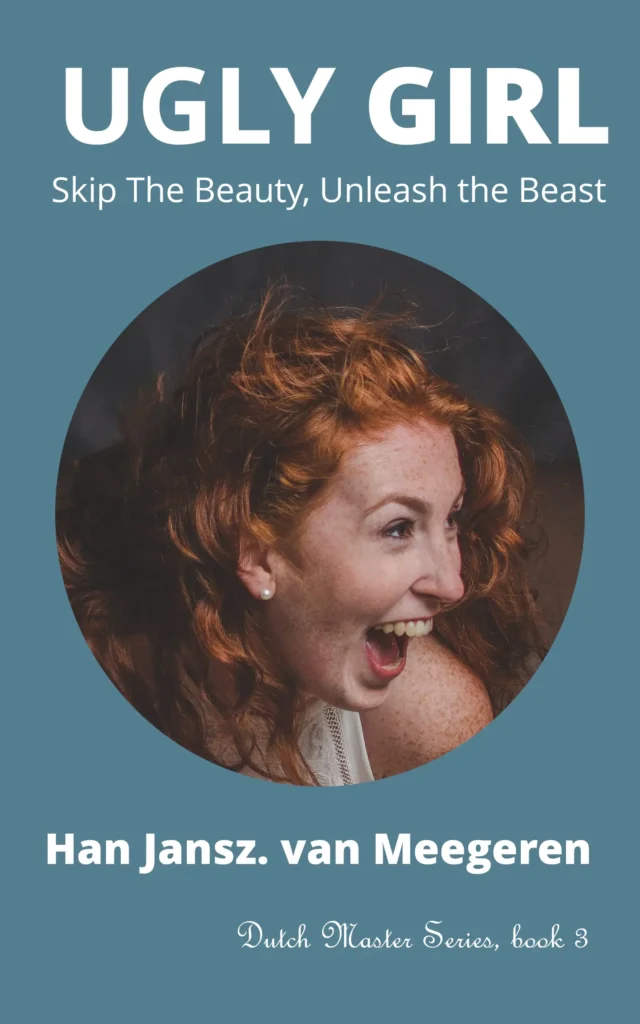
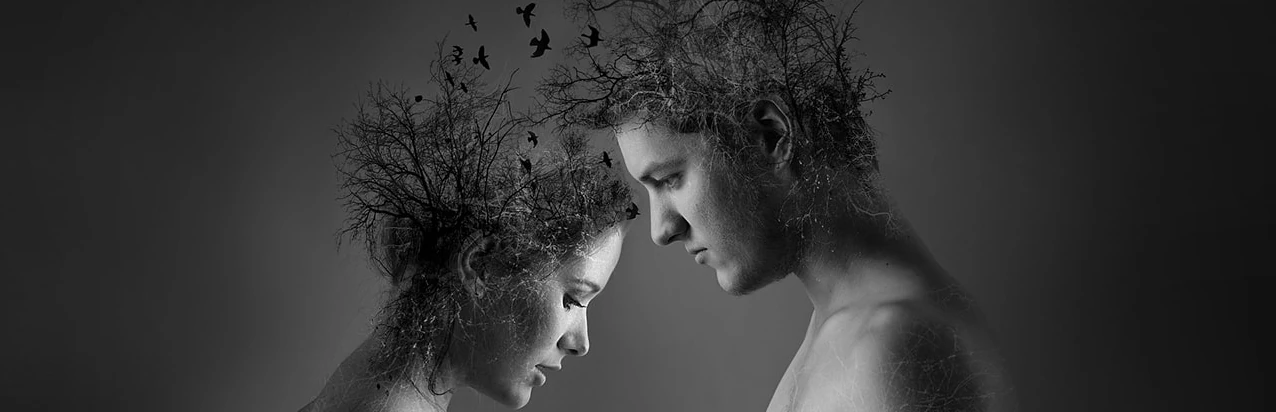
    With no disrespect to the lady in the picture, when Zuzanna looks in the mirror, she sees an ugly girl staring at her. When I look at this picture, I don’t see an ugly woman at all. I see those eyes looking straight through my soul. I see kindness in her face. 

    In this book, we will see her transformation from someone who considers herself ugly towards someone who has accepted what nature has given her? Finally, after all these years, she is like most people, not extremely pretty, nor ugly. Look around. The really pretty people you know are not more than a handful.

    A woman named Desire

    Her husband died eight years ago. Their sex life had not been so great to begin with, but at the end of Johan Lammen’s life, it was practically non-existent. And during the first years of being alone, Zuzanna had other things on her mind. She had resigned herself to become a sexless old spinster. 

    However, being around all these highly sexualised people around her, being chained to Sylvia in the most literal sense of the world, brought Desire back into her life. Perhaps a vibrator might have done the trick for her in the past, but no more. No more, baby, no more.

    I do not know at this point if Zuzanna will be into kink as well. But at least at the end of the book she understands – really understands – the attraction of it. In the beginning of the book, this girl is strictly vanilla, but at the end? I don’t know yet. She often complains at the beginning that her life is boring. Well, at the end of the book that boredom – adventures are for other people, not me – has vanished and is replaced with a feeling of being very much alive. 

    A better understanding of KINK

  • Separation between main character and protagonist

    Separation between main character and protagonist

    Two main character arcs

    In “Ugly Girl” there are two main characters and they are equally important in my story. Both have things they think they want and both have different things they actually need. Personally, I dislike very much the structure where character one, let’s call her Zuzanna, is telling the things that are happening from her perspective and the other, let’s call him Ciaran, from his point of view. Both are talking about I this, I that, I did so and so, I was angry, I was disappointed, etc. In romance books and thrillers the change in POV is often in the chapter’s title. Zuzanna in chapter 1, Ciaran in chapter 2, alternating through the plot of the story until they fuck their brains out in the ever satisfying climax of the story. In thrillers, I usually skip one of those POV’s, so I actually read half of the book. I find it confusing to identify with two characters. Those are essentially two books I’m reading, crammed into one.

    And yet, the learning curve of my two main characters is equally important. So after consulting my mentor the Internet, I think I found a solution for this: to separate the protagonist from the main character.  

    Famous example

    Protagonist

    • The protagonist is the central figure who drives the plot forward.
    • The story is about their goals, actions, and conflicts.
    • They usually face the main challenge or antagonist.

    Main Character

    • The main character is the character through whose eyes we experience the story.
    • They may or may not be the protagonist.
    • The main character is often the narrator or the emotional anchor for the reader.

    In Sherlock Holmes stories:

    • Sherlock Holmes is the protagonist.
      • He solves the crimes.
      • The plot revolves around his brilliance, his deductions, and his actions.
      • He drives the story forward.
    • Dr. John Watson is often the main character.
      • He is usually the narrator.
      • The reader sees the events unfold through his perspective.
      • He provides the emotional lens—his awe, confusion, and admiration for Holmes shape how we perceive Holmes.

    Example:

    In The Hound of the Baskervilles, Watson goes to Dartmoor ahead of Holmes and narrates what he observes. The story is still about Holmes solving the case—that makes Holmes the protagonist—but we experience most of the mystery through Watson’s perspective, making him the main character.

    Summary:

    Role

    Sherlock Holmes

    Dr. Watson

    Protagonist

    ✅ Yes

    ❌ No

    Main Character

    ❌ Usually not

    ✅ Usually yes

    What does it means for my story

    We see Ciaran through the eyes of the Ugly Girl, Zuzanna. No flipping around POVs and we see, and hopefully feel, the change that Ciaran is going through. Going through the pains of adolescence, making mistakes and learn from them, and finally… completing his arc somehow. And as he changes, we will see Zuzanna change as well. I hope it will work out the way I need it to.

  • The Farmstead in the Netherlands

    The Farmstead in the Netherlands

    The farm

    The farmhouse plays an important role in both “Good Girl”, “Bad Girl” and a minor role in “Ugly Girl” as well. This, of course, is not the house in the book, but it comes close to how I imagined it. In the Dutch countryside, you will find lots of farms like this one. In Dutch we call this type of homestead a “kop-hals-rompboerderij”. It is a traditional Dutch farm type known as a “head-neck-trunk farm” in English. It is named for its distinctive structure: the “head” (kop) is the residential section, the “neck” (hals) is a connecting corridor, and the “trunk” (romp) is the main barn for livestock or storage. This design allowed the farmer’s family to live separately from the animals while maintaining an efficient workflow.

    Farmstead in Drenthe

    Location

    Imagine a small, tranquil village named Eikenhof, nestled in the northeastern part of the Netherlands, in the province of Drenthe, which is known for its lush green fields, ancient forests, and gentle rolling landscapes. The Netherlands is a small, flat country in Western Europe, bordered by Germany to the east, Belgium to the south, and the North Sea to the north and west. Drenthe is a rural province with a rich history, famous for its prehistoric dolmens (stone burial monuments).

    Eikenhof lies just 10 kilometres south of Westerbork, a town known for the historic Westerbork transit camp from World War II. It is a small village with around 800 residents, most of whom live in charming thatched-roof farmhouses, many of which are centuries old. A mosaic of farmland, heathlands, and dense forests, perfect for hiking and cycling, surrounds the village. Small, winding roads connect Eikenhof to neighbouring villages, while ancient oaks line the village streets.

    From Eikenhof, it is about 160 kilometres (approximately two hours by car) to Amsterdam, the bustling capital of the Netherlands, known for its canals, museums, and vibrant cultural scene. The nearest larger town is Assen, the capital of Drenthe, located 30 kilometres to the north, offering more extensive shopping, healthcare, and educational facilities. Despite its rural setting, Eikenhof is well-connected by regional roads, making it a peaceful yet accessible place to live.

    Local life in Eikenhof revolves around a small village square with a historic church, a cosy cafe, a primary school, and a community centre where villagers gather for events. The surrounding landscape is dotted with grazing cows, blooming wildflowers in the spring, and golden fields of grain in the summer. The nearby Dwingelderveld National Park, one of the largest wet heathlands in Europe, offers residents and visitors a breathtaking natural escape.

    Eikenhof’s charm lies in its tranquillity, natural beauty, and strong sense of community, making it an idyllic example of rural Dutch life.

    Westerbork is a small well known city because of it’s horrible history

    The Westerbork transit camp was a World War II transit camp in the northeastern Netherlands, used by the Nazi regime to imprison and deport Jews, Roma, and Sinti to extermination camps in Eastern Europe, such as Auschwitz and Sobibor. Established in 1939 as a refugee camp for Jews fleeing Nazi Germany, the Nazis transformed it in 1942 into a deportation hub. The Nazis detained over 100,000 people here, including notable individuals like Anne Frank and her family.

    The camp comprised barracks, a watchtower, and rail tracks that led directly to the trains used for deportations. Dutch citizens know Westerbork as a symbol of the Holocaust in their country, a place where neighbours and fellow citizens were sent to their deaths. The name Westerbork is deeply ingrained in the national consciousness as a reminder of the horrors of the Nazi occupation and the suffering of the Dutch Jewish community.

    After the war, the site became a memorial, with a museum and a haunting monument of broken railroad tracks symbolising the interrupted lives of the victims. The preserved watchtower and reconstructed barracks offer a stark reminder of the suffering endured here. Thousands visit Westerbork each year, including school groups, to learn about this dark chapter of Dutch history. It serves as a place of reflection and remembrance, ensuring that the horrors of the Holocaust are never forgotten.

  • Chapter 1, scene 2 Koen is taken to hospital

    Chapter 1, scene 2 Koen is taken to hospital

    Title scene: Koen is taken to hospital
    Part of: Chapter 1
    # of words: 1146
    Status: First Draft

    Text


    With or without a uniform, Sandor, Sylvia’s and Koen’s second child, is in control of any situation that might occur. Jutta says he looks like his dad. He doesn’t. He is more decisive, more masculine and more stringent. Koen is a wonderful man, but he is always thinking of other people first. Prime example is this giving away his women thing. He is in pain; and is going to die soon, but he isn’t asking for people to comfort him. He wants to ensure these women he feels responsible for will be in a good place once he’s gone.

    With Jutta and Sylvia in the hospital all day, Ilse is in Amsterdam for her study psychology, and Sandor is at work on the Navy base in Groningen. To ease some of the stress, I offered to cook for them. First occasionally, after it became clear Koen would probably have to stay in hospital until — , well, until he died I was there almost daily.

    I was the only one that knew all of Sylvia’s secrets. All of those she wrote in her confession book ‘Bad Girl’ and a couple she didn’t write about. I wasn’t surprised to watch Sandor and see his tension increase. He was looking at his mother and his mother-in-law, still in their hospital clothes, and looked as if Koen was already gone. Ilse, however, more than made up for the quiet moments, her excited chatter about what happened in class today: a constant, bubbly stream.

    “Girl and Little One, in the corner. Now!” Sandor’s voice cut like a knife through their silent mourning.

    Without a second thought, both ladies stood up from the table and found opposite corners in the kitchen, facing the wall.

    “Hands behind your back.” He sighed. “I know this is hard for you, and it’s hard for all of us. Not wearing your slave robe in your Master’s house is unacceptable for both of you. He may not be here, but act as if he is.”

    Sandor waited a moment and looked at me. I nodded. I have seen weirder things in this house.

    “Why do you still wear these outdoor clothes? Undress!”

    Both of them hurriedly took off their clothes. Ilse wanted to sink to her knees and crawl under the table. But Sandor stopped her with a hand gesture. Both my best friend and her Mistress were in the nude now. Sylvia had this big, ugly rose tattooed on her back. She once gave me a book that would tell me all about this tattoo, but it was some weird science fiction book and I am not at all fond of SF, so I never got very far.

    Both women looked good for their age, not an ounce of fat where it didn’t belong, and a butt that was firm and didn’t look like a moon landscape. Neither of them looked visibly tense, their folded hands resting relaxed on their buttocks.

    “Little one. Get both of you slave robes. You have one minute. Go!”

    Jutta flew out of the kitchen, doubtless unaware of her boobies dancing right before my eyes. All she concentrated on was returning to the kitchen in time.

    “Why?” I asked Sandor. “What is suddenly so important is that she is nearly breaking her back to return to the kitchen in time.”

    “Great question. Ilse, why don’t you answer it?”

    Ilse looked straight at me. “She is trying to please my Master.”

    Duh, stating the obvious. Jutta came back panting, with two white linen pieces of cloth in her hands.

    “Make sure Girl is dressed before you get yourself ready. Return to your position when you are done.” It was nothing more than a rectangular long piece of white linen with a hole in it for the head. A piece of red rope kept it together at waist level. Even I could see it looked sexy, but I suspected sex was the last thing on their minds. Both women clearly had no objection to being treated this way, so I kind of was curious where this might lead to.

    “This is the third day in a row you have eaten only a few bites from the delicious meal that Zuzanna has made for us. She has been busy all afternoon to make delightful meals for you girls and not eating it equals to me as an insult to the cook. Ilse, grab their plates and but it in a bowl.”

    Ilse scraped the meat, baked potatoes, carrots, and peas off the plate into a bowl. “Puree it completely and put it back in the bowl. Put it on the floor in their corners.”

    I remember well that as a child, Sandor refused to eat his jars of pureed vegetables. Jutta and Sylvia did not have that luxury because they could not leave their corners until the bowl was empty and licked clean. They could use their hands just to hold the metal bowl into place as they sucked and licked their bowls empty. This was not the first time they ate like this clearly. You and I would take forever to eat without the use of utensils or even your hands. Just with your lips and tongue takes practice.

    If this had been my first time here, I would have been appalled. His methods might have been bizarre, but they were effective. He had taken both women out of their grieving funk by giving them orders and by forcing them to eat; they had actually had eaten a full meal in days. It would not have been my way of doing things, but this was their home, their rules, and the way they liked things to be done. I never judged Sylvia for her behaviour in the past, and I would not start now.

    Their demonstrably altered behaviour was clearly a show of respect towards me. I appreciated that, and I was getting ready to leave.

    “If you don’t feel comfortable, please feel free to leave at any time. We are deeply grateful you are helping us out in these sad times. But if you want to stay, don’t feel obliged to leave on our behalf.”

    As I said before, Sandor was nothing like his father. Koen would have never, ever invited me to an evening of debauchery. It was tempting; I have to admit. As crazy as this family is, it provides free entertainment for an old spinster like me. Before answering, I used a piece of paper to clean my glasses. It seemed safe to assume the three women in the room were breathless with anticipation. I smiled and looked Sandor in the eyes. In every way, he was the definition of a man.

    “Thanks for the offer, but I’m going to pass for now. But it would be very impolite of me to decline your invitation again and again, wouldn’t it?”


  • CHAPTER 1, Scene 1 Walk in the forest

    CHAPTER 1, Scene 1 Walk in the forest

    Title scene: Walk in the Forest
    Part of: Chapter 1
    # of words: 926
    Status: First Draft

    Text

    I have never seen Koen cry until today. It is remarkable and exceptional. He invited me for a walk in the forest. I have been friends with his wife for fifty years, and so I know him well, of course, but we have never been friends. He tolerated me, and perhaps I simply accepted his presence all these years.

    “I am going to die real soon.” He got over his emotions quickly, as a real man should.

    “What?”

    “The doctors told me I have Pancreatic Cancer, stage 4. Jutta told me to see the doctor because I kept losing weight and my skin was so yellow. At first, my doctor thought it was gallbladder disease. But it wasn’t. When they found out, it was inoperable and had already spread.”

    “How long?” I asked, businesslike. He looked at me as if he would have expected such a question from me.

    “One to three months. Six months if I am lucky,” He air quoted the last word.

    “Is there no hope of treatment?”

    “No. It has spread out like wildfire.” He said.

    “How did Jutta and Sylvia react to that?”

    “They don’t know yet. You are the first person I confide in.”

    “You are not serious, I hope.” I said, appalled.

    He was quiet. The trees stand gaunt and motionless, their skeletal limbs stretched skyward as if in quiet surrender. Soaked from the rain these last few weeks. The trees look like they have given up their fight for life, as though they’ve forgotten the warmth of spring. I suddenly realise he will never see those trees coming to life again.

    Suddenly Koen starts talking again. “Both Jutta and Sylvia feel like I have betrayed their trust in me. They said more than once that I should outlive them both. You know enough of our life that they look up to me for guidance and structure in their lives. It’s something both girls need. Not want, but need. Jutta will feel lost, but she has Ilse here to comfort her. And perhaps Sandor as a potential replacement for me. For Sylvia it’s different. Jutta has been my twin flame for … years, Sylvia 6? x Times that long. My death is likely to have the biggest impact on Sylvia.”

    Koen stopped. I felt raindrops on my face. Frequent drops with the potential to turn into a huge rain shower.

    “We have never had a close relationship, but I know you are Sylvia’s best friend for such a long time for a reason. You have her complete trust, more than anyone, including her beloved Jutta. And I have a monumental request, completely unwarranted, and I feel incredibly awkward even asking.”

    He looked ill. Even his eyes were yellow. “Don’t take this the wrong way, please, but after I’m gone, I want to give Sylvia to you.”

    I know Sylvia for a long time. And I know all about the bizarre customs of the BDSM-lifestyle they follow religiously. This suggestion was a new low-point. Mildly I said:

    “You are not Jesus of Nazareth, you know. Even with the best intentions, you cannot rule over your grave. You cannot give people to other people just like that. You will have to discuss this with Sylvia and Jutta. They are human beings with a will of their own. But first you will have to share with them how ill you are. They both have a right to be with you, to stand by your side, to be strong for you. This is something you will have to face together. You always talk about being a team. Well, even if the team is losing a member, remain a team.”

    “I know it’s hard to understand, but it doesn’t work that way. It will comfort them both in their grief. It will aid their recovery, leading to a quicker and more thorough healing process. Trust me on this one. The death of a partner is traumatic for anyone. Losing her master renders a submissive lost and rudderless. It is hard for me as well to give them away, but I have to.

    “It would never work. You know I’m not into your way of living, and certainly not in Sylvia’s. She can be pretty extreme, you know?” I said.

    “I know,” he said drily. “It’s just temporary. I will ask my friend in Germany to find a new master for her. That will not be too difficult.”

    “You arrogant prick,” I said, suddenly angry. “Around the globe, people who outlive their loved ones often live fulfilling lives without the deceased seeking a new partner on their behalf.”

    “I understand you don’t understand our way of life. But I had to try anyhow.”

    In silence, we walked back to our cars. My Toyota Corolla is in stark contrast to his brand new polished BMW. They say a dog resembles its owner. My battered, 23-year-old ugly car also resembled its owner — rusty in the joints, prone to random wheezing, and desperately clinging to the glory days of the ’90s.

    Before we left, I gave Koen a big hug. “I know this is hard. I wish you strength. Talk to your wives. Let them mourn with you, allow them to feel a bit of your pain. Don’t do this all alone, please. Don’t be afraid of death. The universe always takes care of good people.”

    He nodded, got into his car, and left. With a sigh, I leaned against my car, the familiar scent of rust and oil filling my nostrils, opened the door, and slid behind the wheel.


  • Cover pictures

    Who is the Lady in Red?


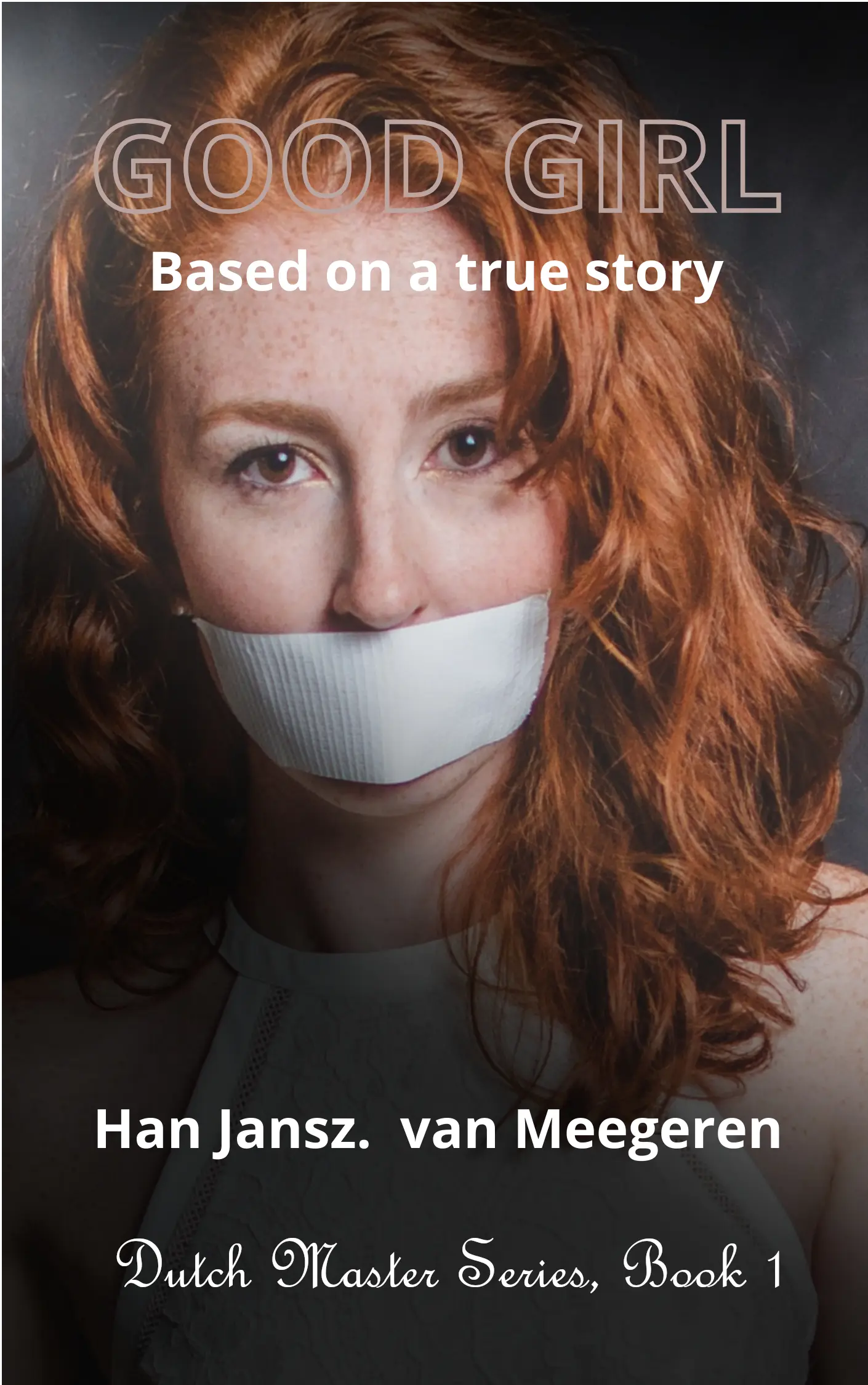
    I do not know what her name is, but I know who took the pictures. His name is “thisismyurl and you can find his work is on Pixabay. In the introduction, he says: You’re free to use any of my images, if you’d like to let me know, I’d love to share a link to my social media when you do! 

    This lady has travelled with me for a long time

    This photo series has always intrigued me. First, this is a very attractive young woman, of course, but it’s way more than that. The contrast between the first and the last photo begged to be used for a cover of my books. It won’t come as a surprise to you I love the first one, given my interest in kink.

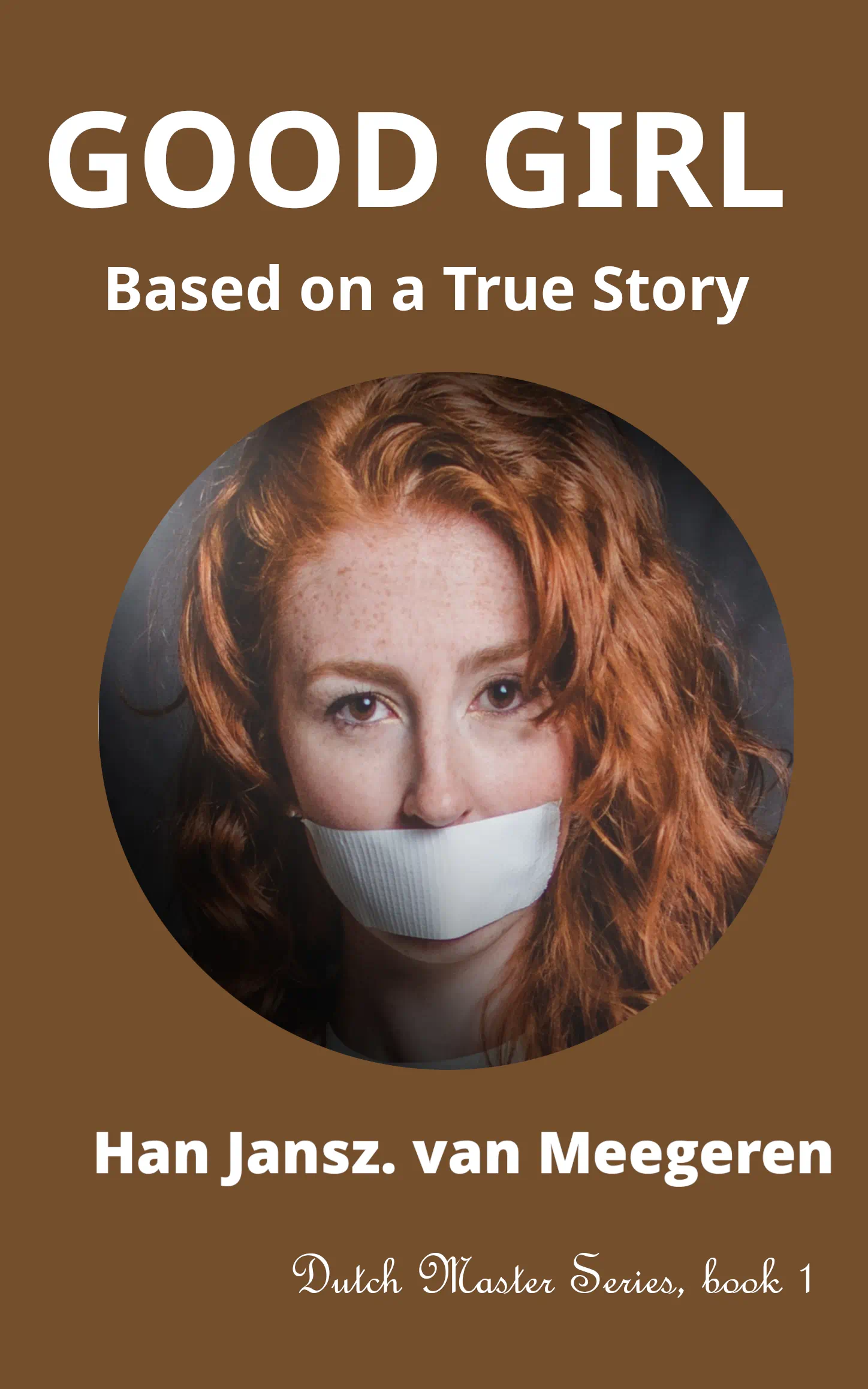
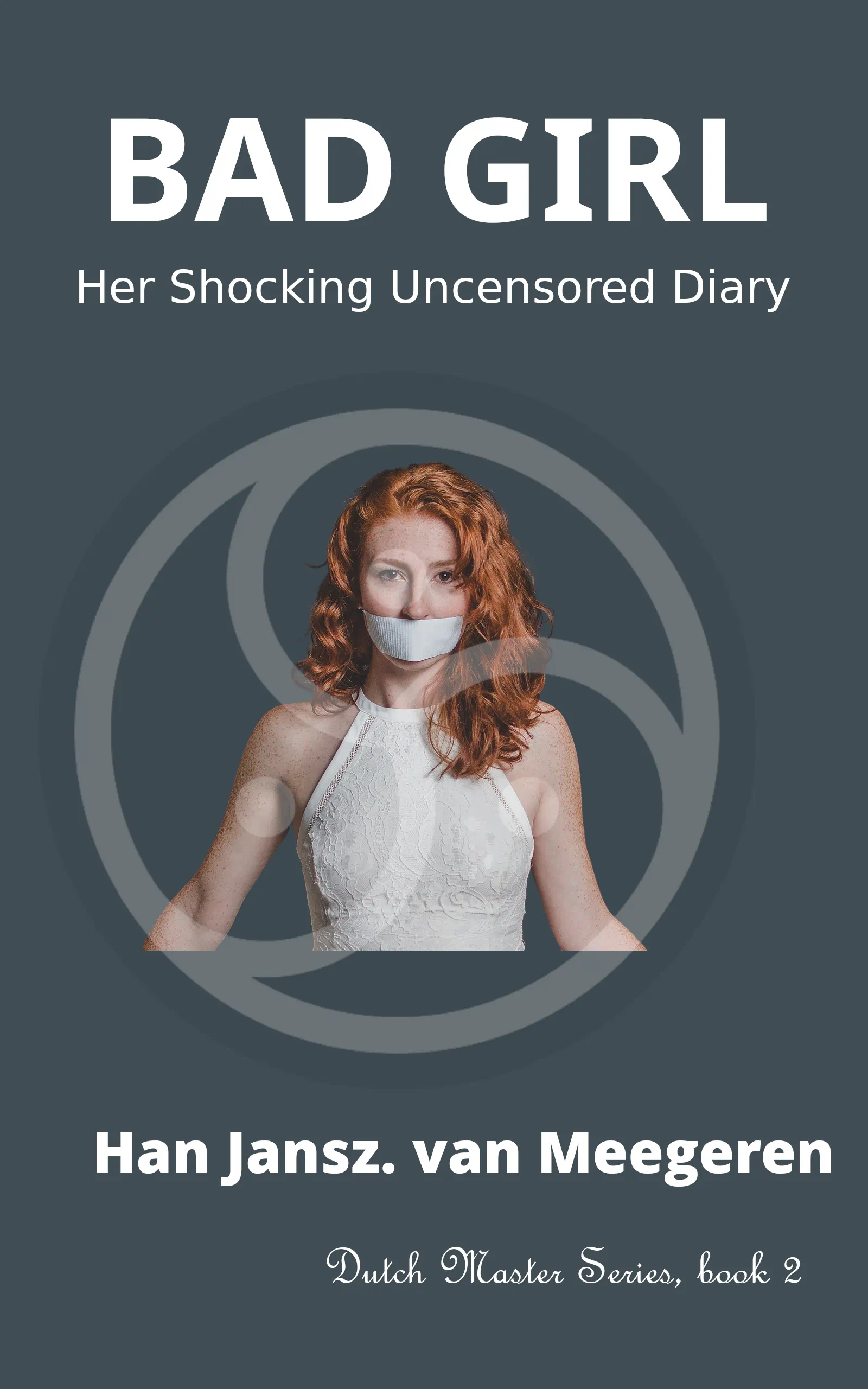
    The photo I used for the cover of “Good Girl” and “Bad Girl” is the same. It’s the first one in this series. 

    On the first cover of Good Girl, you can see I did a few tricks in GIMP by putting a spotlight over her head from the upper left-hand corner. When I finished the covers of “Bad Girl” and “Ugly Girl” I decided to change the first cover to make it more in line with the other two. The Circle that symbolises the BDSM-logo is the size I cut the photo on the original cover. I was pleased with the end result. It makes the picture even more dramatic, and it is not so obvious I used the same picture for both covers. 

    The three dots in the BDSM-logo miraculously found their way in the model’s eye and her two armpits.  

    The last laugh is on you girl, after I saw the last photo in the series, there was no doubt in my mind that this was the ONE I had to use for the last cover.

  • Mixed reactions on Bad Girl

    Bad Girl received mixed reactions

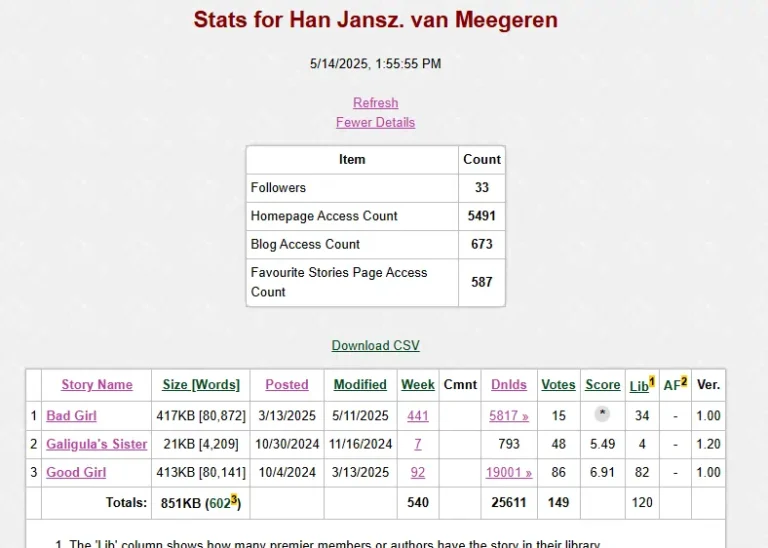
    Half May I finished posting “Bad Girl” on Stories Online. Compared to “Good Girl” it doesn’t do all that well, I’m afraid. That was a little surprise for me, as I consider “Bad Girl” a better book than its predecessor. 

    0 (zero) Comments in the mail
    0 (zero) Comments on my blog posts there
    Only 15 people bothered to vote, and that is not enough to display the score of the story (7,2). That is, in and of itself, not a bad score after all, but there are few stories on Stories Online with 80 k words that don’t get the minimum scoring numbers to display it on the site for all to see. 

    I am quite pleased with the downloads of “Good Girl” 19.000, still going slow but steady towards 20.000 with 86 votes.

    “Bad Girl” is more recent, so its downloads may grow, but 15 votes is – at the least – meagre. 

    Feedback from ProWriting Aid:

    General Impressions

    • Story Overview

    Genre: Novel, Erotica, BDSM

    Sylvia, caught in a web of BDSM desires and a crumbling marriage, navigates a tumultuous journey of self-discovery. Trading a gentle Dom for a strict Mistress, she grapples with guilt, shame, and the thrill of submission, finding solace in unexpected places.

    • What Really Worked For Me
      • Jutta’s Transformation: Seeing Jutta evolve from a seemingly ordinary woman into a powerful Mistress was fascinating. I was captivated by her confidence and the way she took control, which added a layer of excitement to the story.
      • The Dungeon Scenes: The detailed descriptions of the BDSM scenes, like “The Luminous Altar,” were incredibly visceral. I could almost feel the heat and the tension, making these moments both disturbing and thrilling.
      • Sylvia’s Vulnerability: Sylvia’s honesty about her desires and insecurities made her relatable, despite the unconventional nature of her relationships. I found myself empathizing with her struggles and rooting for her happiness.
      • The Shifting Power Dynamics: The constantly changing power dynamics between Sylvia, Koen, and Jutta kept me on my toes. I was intrigued by the way their roles shifted and how they navigated the complexities of their polyamorous relationship.
      • The Contrast Between Koen and Martin: The stark difference between Koen’s gentle dominance and Martin’s harsher approach highlighted the spectrum of BDSM practices. It made me think about the different ways people experience and express power in these relationships.
    • The Heart of the Story

    The emotional core of the story revolves around Sylvia’s struggle for self-acceptance and her search for belonging. Her journey is a tumultuous exploration of her BDSM desires, her guilt over her infidelity, and her attempt to find her place in a complex polyamorous relationship. The central conflict lies not only in her broken marriage but also in her internal battle between her desire for submission and her fear of losing herself completely.

    One underlying theme is the redemptive power of forgiveness. Throughout the story, Sylvia seeks forgiveness from Koen and Jutta, but ultimately, she must forgive herself for her past mistakes and accept her true nature. This theme resonated with me deeply, as it explored the difficult but necessary process of coming to terms with one’s flaws and finding peace within oneself. I felt a quiet sense of hope as Sylvia began to embrace her desires without shame.

    Another theme is the fluid nature of power. The dynamics between Sylvia, Koen, and Jutta are constantly shifting, blurring the lines between dominant and submissive. This theme created a sense of intrigue and kept me wondering about the true nature of their relationship. It also made me reflect on the complex interplay of power in all relationships, and how control can be both given and taken. The scene where Jutta gives all her possessions away to Koen, and the subsequent dungeon scene, exemplified this power shift in a surprising and thought-provoking way.

    • Character List

    Character

    Made Me Feel

    Memorability

    Story Presence

    Sylvia (van Geelen, slut, girl)

    Empathy, Curiosity, Anxiety

    Iconic

    70%

    Jutta (Mistress, Little One)

    Admiration, Surprise, Concern

    High

    60%

    Koen (Master, Daddy)

    Pity, Frustration, Curiosity

    High

    50%

    Helga (Mistress)

    Admiration, Fear, Disgust

    Medium

    15%

    Martin (Master)

    Disgust, Curiosity

    Medium

    15%

    Ilse

    Curiosity, Amusement

    Medium

    10%

    Sandor

    Admiration, Joy

    Medium

    10%

    Zuzanna

    Empathy, Admiration

    Medium

    5%

    Sybil

    Anger, Curiosity

    Low

    5%

    Damien (Master)

    Anger, Contempt

    Low

    5%

    Natasha

    Anger

    Low

    2%

    Peter

    Pity

    Low

    2%

    • Emotional Journey

    Chapter

    Title

    Emotional Impact

    Pacing & Flow

    Reader Engagement

    Chapter 1

    Going Home

    Anxiety, Confusion, Fear

    Fast-Paced

    High

    Chapter 2

    Three Months Later…

    Curiosity, Disgust, Hope

    Moderate

    Medium

    Chapter 3

    To Amsterdam

    Amusement, Tension

    Moderate

    Medium

    Chapter 4

    Getting a Tattoo

    Anxiety, Admiration, Surprise

    Moderate

    Medium

    Chapter 5

    Trouble in Paradise

    Tension, Sadness, Relief

    Moderate

    Medium

    Chapter 6

    Go Home and See the Kids

    Anxiety, Anger, Joy

    Fast-Paced

    High

    Chapter 7

    The Luminous Altar

    Fear, Disgust, Tension

    Moderate

    Medium

    Chapter 8

    Confession

    Shame, Vulnerability, Hope

    Moderate

    Medium

    Chapter 9

    Young and Stupid

    Disgust, Embarrassment

    Fast-Paced

    Medium

    Chapter 10

    Master Ricardo

    Humiliation, Curiosity

    Moderate

    Medium

    Chapter 11

    Alex

    Disgust, Curiosity, Embarrassment

    Fast-Paced

    High

    Chapter 12

    Devil Boy I

    Anger, Disgust, Pity

    Fast-Paced

    High

    Chapter 13

    Devil Boy II

    Anger, Disgust, Pity

    Fast-Paced

    Medium

    Chapter 14

    Sybil

    Disgust, Surprise

    Fast-Paced

    Medium

    Chapter 15

    Payback Weekend

    Confusion, Amusement, Sadness

    Slow

    Medium

    Chapter 16

    The Rock Comes Tumbling Down

    Sadness, Empathy, Admiration

    Slow

    Medium

    Chapter 17

    Ilse is Coming Home

    Curiosity, Surprise, Joy

    Moderate

    High

    Chapter 18

    Say Yes to the Dress

    Anxiety, Humiliation

    Moderate

    Medium

    Chapter 19

    Letters

    Sadness, Excitement

    Moderate

    Medium

    Chapter 20

    Zuzanna

    Fear, Relief, Guilt

    Moderate

    Medium

    Chapter 21

    Welcome to New Beginnings

    Anxiety, Disgust

    Moderate

    Medium

    Reading Experience

    • My First Impressions

    The opening chapters grabbed me immediately. I was drawn into Sylvia’s world, intrigued by her vulnerability and the unusual dynamics of her relationship with Koen and Jutta. I felt a sense of unease and fascination, wondering where her journey would lead.

    • What I Felt Reading Your Book
      • Intrigue and Curiosity: From the very beginning, I was captivated by the complexities of Sylvia’s relationships and her exploration of BDSM.
      • Discomfort and Unease: The detailed descriptions of some scenes, particularly those involving pain and humiliation, were difficult to read at times. However, they also added a visceral quality to the story, making it feel raw and real.
      • Empathy and Connection: Despite the unconventional nature of Sylvia’s experiences, I felt a strong connection with her. Her vulnerability and her search for belonging resonated with me on a personal level.
      • Surprise and Disbelief: Several unexpected twists, like Jutta’s confession of love for Sylvia and Koen’s reaction to the nettle incident, kept me on my toes and made me question my assumptions about their relationship.
      • Hope and Admiration: I felt a sense of hope as Sylvia began to embrace her true self. I admired her strength and resilience in the face of adversity.
    • Climax and Resolution
      • Climax: The collaring ceremony at Club Kinky Kinta felt like a powerful and fitting climax. It captured the emotional culmination of Sylvia’s journey—her acceptance of her submissive nature and her desire for belonging. While the scene itself was intense, it also carried a sense of ritual and significance. It delivered on the themes of forgiveness and the fluid nature of power.
      • Resolution: The ending, with Sylvia finding peace in her new family dynamic, provided a sense of closure. While I was sad that she lost contact with Peter, I also felt that she had finally found her place in the world. The resolution felt realistic and hopeful, suggesting that even unconventional relationships can offer love, acceptance, and a sense of belonging.
    • How I Felt About Your Characters
      • Most Liked: I liked Jutta the most. Her transformation from a quiet presence to a confident Mistress was fascinating to watch. I admired her strength and the way she embraced her desires. I also appreciated her empathy towards Sylvia, especially during vulnerable moments.
      • Most Interesting: I found Sylvia the most intriguing character. Her emotional journey was complex and relatable, even though her experiences were far from ordinary. I was constantly curious about her motivations and how she would navigate the challenges she faced.
      • Least Liked: I liked Damien the least. His manipulative and exploitative behavior towards Sylvia was disturbing, and I felt angry on her behalf. I also found his lack of remorse and his arrogance off-putting.
      • Least Believable: I struggled to fully believe Natasha’s complete rejection of Sylvia and Koen. While strained family relationships are realistic, her lack of any attempt at reconciliation felt somewhat extreme, especially given the circumstances.
    • Adherence to Genre
      • Explicit Sexual Content: The story embraces the explicit nature of the BDSM genre, providing detailed descriptions of sexual acts and power dynamics. This explicitness enhanced the visceral quality of the story.
      • Exploration of Power Dynamics: The story delves into the complex power dynamics inherent in BDSM relationships, showcasing the different ways people experience and express dominance and submission. This exploration added depth and complexity to the narrative.
      • Focus on Consent and Negotiation: Despite the unconventional nature of the relationships, the story emphasizes the importance of consent and negotiation. This emphasis grounded the story in reality and made it more relatable.
      • Emotional Vulnerability: While the BDSM genre often focuses on physical sensations, this story also explores the emotional vulnerability of the characters. This vulnerability made the story more engaging and emotionally resonant.
      • Subversion of Traditional Romance Tropes: The story challenges traditional romance tropes by portraying a polyamorous relationship and focusing on the complexities of BDSM. This subversion added a fresh and unexpected element to the narrative.
    • Pacing

    The pacing felt generally well-suited to the story’s episodic structure, allowing for both fast-paced action and slower moments of reflection. However, some of Sylvia’s diary entries, particularly the ones about her childhood and teenage years, felt a bit slow and meandering. For example, the detailed descriptions of her early sexual experiences in Chapter 9 and 12, while relevant to her character development, could be tightened to maintain a more engaging pace. Conversely, the events leading up to Koen and Jutta’s wedding in Chapter 18 felt a bit rushed, leaving me wanting to experience more of the emotional build-up.

    • Almost Put the Book Down
      • Nettle Scene (Chapter 20): While I appreciated the intensity of this scene, the level of detail regarding Sylvia’s pain and discomfort was a bit too much for me. I felt overwhelmed by the graphic descriptions and almost put the book down. To make it more impactful, the description of Sylvia’s physical and emotional suffering could be streamlined, focusing on the key moments of her ordeal rather than dwelling on every detail.
      • The Luminous Altar Scene (Chapter 7): This scene also pushed my boundaries in terms of graphic content. The detailed description of Helga’s torture felt excessive and almost made me stop reading. To improve this scene, I suggest toning down the graphic details and focusing more on the psychological impact of the event on both Helga and Sylvia.
    • Tension

    The tension in the story is often driven by the unpredictable nature of the characters’ relationships and the inherent risks of BDSM. The constant shifting of power dynamics and the exploration of Sylvia’s emotional vulnerability created a compelling sense of unease. The scene where Sylvia is left alone in the birdcage after Helga’s demonstration (Chapter 16) was particularly memorable and kept me on the edge of my seat. However, the tension sometimes dissipated during long stretches of exposition or backstory, such as in the extended diary entries about Sylvia’s affair with Alex in Chapter 11. I believe these sections, while important for character development, could benefit from a more concise approach to maintain a higher level of tension.

    • Thoughts On Your Writing Style
      • Voice and Tone: The first-person narrative voice creates a sense of intimacy and immediacy, drawing me into Sylvia’s emotional world. The tone shifts effectively, reflecting Sylvia’s changing emotional state, from vulnerable and self-deprecating to confident and assertive. For example, “I may have suggested to Koen I was his property, but that was within the bounds of our safe roleplay.” demonstrates both Sylvia’s vulnerability and her awareness of the power dynamics at play.
      • Sentence Structure & Rhythm: While the sentence structure is generally clear, there are instances of repetitive phrasing and run-on sentences that disrupt the flow. “I sobbed about lost opportunities, broken promises and undeniable self-pity. How deep had I dug the hole for myself that I had fallen into?” These two short sentences could be combined for a smoother rhythm.
      • Imagery and Sensory Details: The writing often evokes vivid imagery, particularly in the dungeon scenes, engaging my senses and making the experiences feel real. For example, “The stench of mildew and decay hung heavy in the dungeon air; I couldn’t believe I hadn’t noticed it earlier.” effectively conveys the atmosphere of the dungeon.
      • Figurative Language: The use of figurative language, like similes and metaphors, enhances the story’s emotional impact. “His flat hand with the strength of a fist against my face.” vividly portrays the force of Koen’s anger.
      • POV: The first-person POV is essential for Sylvia’s journey of self-discovery. It allows me to experience her emotions and thoughts firsthand, creating a deep connection with her character. However, it also limits my understanding of other characters’ motivations, especially Koen and Jutta.
      • Overall Impression: The writing style is generally engaging and effective in conveying Sylvia’s emotional journey. However, some tightening of sentences and more careful use of figurative language would enhance the story’s impact.
    • Dialogue

    The dialogue, for the most part, feels natural and authentic. It successfully develops the characters, revealing their personalities, motivations, and the complex dynamics between them. The use of Dutch phrases and expressions adds a unique flavor to the story, and I appreciated the inclusion of translations, making it accessible even to readers unfamiliar with the language. However, some conversations, particularly those involving confrontations or emotional outbursts, could be more impactful with tighter phrasing and more attention to the characters’ individual voices.

    The conversations between Sylvia and Jutta are often particularly engaging. For example, in Chapter 14, when Sylvia questions Jutta about her lack of punishment, their dialogue reveals a deeper understanding between them. “Is reading all of this out loud for us not enough punishment for you?” “Mistress, I must say it is not so.” This short exchange is impactful in its simplicity, showing the unspoken connection between them.

    Some of the dialogue, however, feels repetitive or lacks the nuances of real conversation. In Chapter 3, the argument between Koen and Jutta about Sylvia travelling in the car’s trunk becomes a bit tedious, with each character repeating their points multiple times. “Jutta, that will not happen. I’m serious.” “But I took her from Martin’s farm in the back of your Transit van before, so what is the difference?” This exchange, and the subsequent back-and-forth, could be condensed to maintain a more engaging pace and highlight the underlying tension between them. Instead of repeating the same arguments, the dialogue could focus on their emotional reactions and the unspoken power struggle beneath the surface.

    Reader Insights

    • Standout Moments
      1. Sylvia’s return to Koen: This initial decision set the stage for the entire story, creating a sense of unease and anticipation. I felt anxious about what her life with Koen and Jutta would be like.
      2. Sylvia’s head shaving: This act felt both symbolic and disturbing. It marked a turning point in her journey, stripping her of her identity and making her feel vulnerable.
      3. The car journey to Amsterdam: This was the first time I saw a glimpse of genuine connection between Sylvia and Jutta. Their conversation about Koen’s past felt intimate and revealing.
      4. The needle scene with Jutta: This moment was incredibly intense and disturbing. It showcased the extremes of their BDSM relationship and made me question the boundaries of consent.
      5. The confession of Sylvia’s infidelity: This was a pivotal moment in the story. It exposed Sylvia’s vulnerability and tested the limits of Koen and Jutta’s forgiveness.
      6. The collaring ceremony: This felt like a powerful and fitting climax. It symbolized Sylvia’s acceptance of her submissive nature and her desire for belonging.
      7. Sandor and Ilse’s arrival at the club: This was an unexpected and shocking moment. It highlighted the unconventional nature of their family dynamic and left me wondering about the future.
    • Memorable Quotes
      1. “Women know deep down inside we can suffer way better and more than men.” This quote, spoken by Jutta, captures the complex nature of female masochism. It resonated with me because it challenges traditional gender roles and explores the different ways women experience pain and pleasure.
      2. “Your best option right now is to please me as you have never pleased another woman before.” This quote, also spoken by Jutta, highlights the power dynamics in their relationship. It establishes Jutta’s dominance and Sylvia’s willingness to submit.
      3. “I need you to destroy me.” This quote, spoken by Sylvia, reveals the depths of her masochistic desires. It showcases her willingness to surrender completely to Koen’s control.
      4. “Home is where you are, my master.” This quote, spoken by Jutta, captures the essence of her submission. It shows her complete devotion to Koen and her willingness to follow him wherever he goes.
    • Original Elements
      1. The Blend of BDSM and Domesticity: The story seamlessly blends the world of BDSM with the everyday realities of domestic life. This juxtaposition created a unique and compelling dynamic. (Chapters 2, 5)
      2. Jutta’s Perspective: The inclusion of Jutta’s perspective, particularly her own struggles with submission and her unexpected love for Sylvia, added a layer of complexity not often seen in BDSM narratives. It challenged my assumptions about dominant/submissive relationships and made the story more emotionally resonant. (Chapters 5, 7, 16)
      3. Sylvia’s Age: Portraying a woman in her sixties as the protagonist of a BDSM story is refreshing. It challenges societal norms about age and sexuality, offering a different perspective on female desire and submission. (Throughout the manuscript)
    • Clichéd Elements
      1. The “Bad Boy” Trope: Damien, as the stereotypical bad boy who takes advantage of Sylvia, felt a bit clichéd. His character lacked depth and nuance, making his motivations seem simplistic. To improve this, I suggest exploring Damien’s background and motivations more deeply. What drives his manipulative behavior? Adding layers to his character would make him more believable and the relationship more complex. (Chapters 12, 13)
    • Editing Suggestions
      1. Streamline the Diary Entries: Condense some of the longer diary entries, particularly those dealing with backstory, to maintain a more engaging pace.
      2. Vary the Sentence Structure: Pay attention to sentence rhythm and avoid repetitive phrasing to improve the flow of the prose.
      3. Develop Secondary Characters: Explore the motivations and backstories of secondary characters like Natasha and Peter to make them feel more fully realized.
      4. Show, Don’t Tell: In some scenes, particularly those involving emotional turmoil, rely more on showing the characters’ reactions and less on telling the reader how they feel.
      5. Refine the Dialogue: Tighten the dialogue in some conversations to enhance the characters’ individual voices and avoid repetition.
    • Ideas To Explore
      1. Natasha’s Motivation: What are the underlying reasons for Natasha’s complete rejection of Sylvia and Koen? Exploring her perspective could add a layer of complexity to the family dynamic.
      2. Ilse and Sandor’s Relationship: How will Ilse and Sandor’s BDSM relationship evolve as they navigate the challenges of living together and building a life outside the lifestyle?
      3. Koen’s Internal Conflict: How does Koen reconcile his gentle nature with his desire to be a dominant? Exploring his internal conflict could provide further insight into his character.
      4. Sylvia’s Long-Term Happiness: Will Sylvia find lasting happiness in her new role as “girl,” or will her desire for more extreme BDSM experiences resurface?
      5. Jutta’s Past: What experiences in Jutta’s past shaped her understanding of dominance and submission? Exploring her backstory could add depth to her character.

    Marketing Ideas

    • Who Is This Story For?

    This story is for mature readers interested in exploring the complexities of BDSM relationships, particularly those who enjoy narratives with strong female characters. Women who enjoy exploring themes of female sexuality and power dynamics may particularly connect with Sylvia’s journey.

    • Ideas for Your Title
      • The Mistress’s Girl: This title highlights the central relationship between Sylvia and Jutta, emphasizing the power dynamic and Sylvia’s submission.
      • Three Hearts, One Home: This title captures the unconventional nature of their polyamorous relationship and their search for belonging.
      • The Language of Knots: This title alludes to the intricate ties that bind the characters together, both emotionally and physically, and suggests the complexities of their BDSM lifestyle.
    • Similar Books
      • Nine and a Half Weeks (Elizabeth McNeill): Both stories explore the complexities of BDSM relationships and the emotional vulnerability of the submissive partner. Both protagonists embark on a journey of self-discovery through sexual exploration.
      • The Story of O (Pauline Réage): Both stories feature female protagonists who embrace submission and find pleasure in pain. Both narratives delve into the psychological aspects of BDSM and the blurring of boundaries between love and control.
      • The Claiming of Sleeping Beauty (A.N. Roquelaure): Both narratives explore the world of BDSM and the dynamics of dominance and submission. Both feature female protagonists who find empowerment through their submissive roles.
    • Similar Characters
      • Sylvia: Similar to Anastasia Steele in Fifty Shades of Grey, Sylvia enters the world of BDSM with a mix of curiosity and trepidation. Both characters grapple with their desires for submission and their fear of losing themselves in the process.
      • Jutta: Similar to Miranda Priestly in The Devil Wears Prada, Jutta initially appears cold and demanding but gradually reveals a more complex and empathetic side. Both characters wield considerable power in their respective domains and use it to shape the lives of those around them.

    Koen: Similar to Atticus Finch in To Kill a Mockingbird, Koen is a gentle and principled man who strives to do what is right, even in the face of adversity. Both characters act as protectors and guides for those they care about.

  • Outline using Aeon Timeline

    Example of outline Ugly Girl, the first scenes

    As an example of my way of outlining, I plot every little scene that is happening on a timeline. The sync-function in Aeon Timeline syncs all these events to Scrivener, my writing program. 

    Depending on your eyesight, you may see above the Walk in the Forest. It takes place on Monday 7 February 2028. The time is irrelevant for the story, so I skip the time, only the date matters. 

    The next thing I have to do is where this event fits in my story. For now, it’s in the first scene, but that may change, of course. Some events don’t end up in the book, but are important for me as a reminder. 

    The walk in the Forest is the first scene in the book. I made a short description of what happens in the scene:

    Koen invites out of the blue Zuzanna for a walk in the forest. He tells her he is going to die soon, and that she is the first to know. He wants to ‘give’ Sylvia away to Zuzanna after he is gone, but Zuzanna thinks this is too crazy for words.

    On the right bar of the screen you see who is in that scene: Koen de Groen, 66 years, 7 months and Zuzanna Sówka, 65 years and 3 months. They are the participants in the scene, my main characters. In some scenes, there are some people present but are not relevant to the scene. I want to list them as “observer”, because in a different view I can see the age of the all the people that were present during that event. 

    I add in what book(s) the scene takes place. In this case, Ugly Girl, but some scenes are also mentioned in Good Girl or Bad Girl as well. The scenes are grouped by Book in my timeline, so the book is relevant. I did not add location here, because I do not want to make a list of a thousand locations in my location folder. If the location appears only once in the book, I omit filling in Location.

    Relates to groups all the scenes in one chapter, and the ‘save the cat story beat’ tells me how this scene fits into the structure of my story. 

    You are right. It’s a lot of work. Does it have a purpose? Does it help to outline this way, and does it make the story better? 

    We will find out, won’t we? For now, it helps me. Filling out all this metadata has become a bit of a routine, so – providing my thoughts doesn’t go so fast I can’t keep up entering data – goes quickly enough.

  • Quote Pauline Reáge


    Quote from Good Girl

    “Keep me rather in this cage, and feed me sparingly, if you dare. Anything that brings me closer to illness and the edge of death makes me more faithful. It is only when you make me suffer that I feel safe and secure. You should never have agreed to be a god for me if you were afraid to assume the duties of a god, and we know that they are not as tender as all that. You have already seen me cry. Now you must learn to relish my tears.”
    Pauline Reáge
    Story of O


    Quote from Bad Girl

    Her surrender was not the surrender of one who has lost, but the surrender of one who has finally found herself.
    Pauline Reáge
    Story of O


    Quote in Ugly Girl

    There is nothing uglier than a woman who gives herself without desire
    Pauline Reáge
    Story of O


    Why this Quote?

    The novel Histoire d’O by Pauline Réage (published in 1954) does not contain many direct references to “ugliness” in the conventional sense—its tone is more focused on beauty, eroticism, submission, and power dynamics. However, there is a notable passage where ugliness is contrasted with the idea of submission or desire, often in a philosophical or symbolic way.
    A frequently cited line related to ugliness is:

    “Il n’y a rien de plus laid qu’une femme qui se donne sans désir.”
    “There is nothing uglier than a woman who gives herself without desire.”

    This quote reflects the novel’s recurring theme: that the erotic becomes disturbing or “ugly” when it lacks authenticity or voluntary surrender.